





After an autism diagnosis, many parents wonder whether their child may benefit from ABA therapy, occupational therapy (OT), or both. While these services can work well together, the right approach depends on a child’s individual strengths, needs, daily routines, and goals. A comprehensive evaluation can help families make an informed decision.
Understanding ABA Therapy
Applied Behavior Analysis (ABA) is an individualized, evidence-based approach that uses observation, teaching strategies, and positive reinforcement to help children build meaningful skills. Depending on the child’s goals, ABA may support communication, social interaction, play, learning readiness, self-care routines, and adaptive behavior.
ABA goals should be developed with the child and family’s priorities in mind and reviewed regularly as the child grows and progresses.
ABA commonly focuses on:
- Communication and social interaction
- Daily living skills and independence
- Learning readiness
- Adaptive skills and positive behavior support
ABA goals are individualized and reviewed regularly using progress data. Skills may be practiced through everyday routines at home, school, and in the community so children can use them in meaningful settings.
Understanding Occupational Therapy for Autism
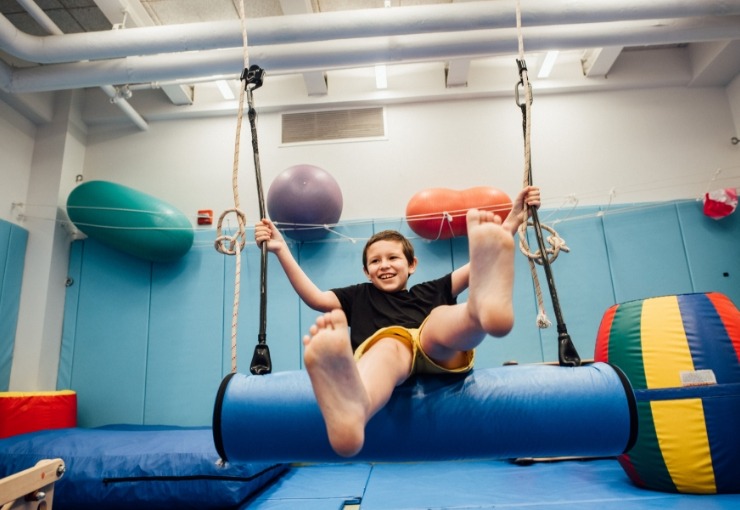
Occupational therapy (OT) helps children participate more comfortably and independently in everyday activities at home, school, and in the community. An occupational therapist may assess sensory processing, fine- and gross-motor skills, play, self-care, and environmental factors that affect participation.
Occupational therapy may support:
- Sensory processing
- Fine motor skills/handwriting
- Gross motor coordination
- Daily living skills
- Emotional regulation
Some children may also receive school-based occupational therapy. When appropriate, therapists, families, and educators can work together to support consistent goals across school and home.
Occupational Therapy vs ABA Therapy: Detailed Comparison!
ABA therapy and occupational therapy are often provided together; however, they are distinct and have different developmental goals. Families are free to select the appropriate services as long as they are aware of the differences among them.
| ABA Therapy | Occupational Therapy |
| Focuses on learning and behavior | Focuses on daily function and participation |
| Builds communication and adaptive behaviors | Develops sensory, motor, and self-care skills |
| Uses behavior analysis techniques | Uses therapeutic activities and sensory strategies |
| Measures behavioral progress | Measures functional independence |
There’s no definitive answer as to which therapy is better. Both are suitable to support various developmental needs; let’s understand their differences and primary objectives:
- Occupational therapy assists children in confidently and independently engaging in their everyday activities.
- ABA therapy helps children learn new behaviors, helps identify barriers to learning, and teaches skills that can support participation.
How can a child with autism benefit from both therapies?
For some children, ABA and therapy and occupational therapy for autism may complement one another when services are coordinated around individualized educational and developmental goals.
Scenario 1: Sensory Challenges Affecting Behavior
Sensory differences can affect a child’s comfort, participation, and responses during everyday routines.
How occupational therapy helps:
- May support sensory regulation
- Teaches calming strategies
- May help children participate more comfortably in challenging environments
How ABA therapy helps:
- Teaches appropriate responses
- Reinforces coping behaviors
- Encourages communication
Scenario 2: Building Daily Living Skills
A child may need additional support with dressing, feeding, or other self-care routines.
How occupational therapy helps:
- Improves fine motor skills
- Builds independence in self-care
- Supports coordination
How ABA therapy helps:
- Breaks tasks into steps
- Supports practice and completion of routine steps
- Builds consistent routines
Scenario 3: Preparing for School Success
School demands focus, participation, and social interaction.
How occupational therapy helps:
- Strengthens fine motor skills
- Supports classroom participation
- Improves sensory regulation
How ABA therapy helps:
- May support task engagement and completion
- Develops communication skills
- Reinforces classroom behaviors
In many settings, school-based occupational therapy and ABA providers collaborate to support shared goals.
According to CDC estimates based on 2022 surveillance data, about 1 in 31 8-year-old children were identified with autism spectrum disorder across 16 monitoring sites in the United States. This statistic is a vital reason why NYC needs tailored, coordinated support for each autistic child.
How Do ABA and Occupational Therapists Collaborate?
Occupational and ABA therapists work together towards the same development goals.
Collaborative Care in Action:
- Set shared goals based on the child’s individual needs.
- Exchange progress updates between providers.
- Repeat practicing the same skills at home, at school, and in therapy.
- Include families and loved ones in daily activities and routines at home.
- Observe and adapt to the progress as and when it happens.
Consistent support helps children apply new skills across environments.
How to Decide Whether Your Child May Benefit From ABA, OT, or Both
Treatment should be individualized, not the standard list.
Questions to Consider
- Does your child have a thorough developmental assessment?
- What are your child’s greatest strengths and challenges?
- What are the most needed functional skills?
- What recommendations do qualified professionals make based on my child’s assessment?
- How will progress be measured and reviewed over time?
Children’s needs can change as they grow. Treatment should be modified. Families should look for individualized, collaborative care from qualified providers.
Conclusion
ABA therapy and occupational therapy can address different but complementary needs. Some children may benefit from one service, while others may benefit from coordinated support based on their individual goals. Some children do well on one therapy; others do well on two. All plans are tailored to increase independence at home, at school, and in the community.
For those interested in discussing ABA support, start with a comprehensive evaluation. Positioning your child with a coordinated team of professionals can help you identify your unique needs and receive the best guidance on how your child can make meaningful developmental progress.
Frequently Asked Questions
1. Can my child receive both ABA therapy and occupational therapy?
Yes. A child may receive both Applied Behavior Analysis (ABA) and occupational therapy when an individualized evaluation shows that both services would support their needs and goals. At Manhattan Children’s Center, ABA principles and occupational therapy are integrated through MCC’s Transdisciplinary Behavioral Model®, helping students practice skills across classroom activities, therapy sessions, daily routines, and community settings. Learn about MCC’s approach.
2. Does every child with autism need occupational therapy?
No. Occupational therapy is recommended according to each child’s individual strengths, needs, and educational goals. It may benefit children who need support with sensory processing, fine-motor skills, self-care, play, classroom participation, or everyday routines. Occupational therapy commonly addresses participation in activities such as dressing, eating, learning, and social interaction. Learn about occupational therapy at MCC.
3. How do I know whether my child needs ABA, occupational therapy, or both?
A multidisciplinary evaluation is the best place to start. Qualified professionals consider the child’s communication, behavior, sensory processing, motor abilities, daily living skills, learning needs, and family priorities. The findings can help determine whether ABA, occupational therapy, or a coordinated combination of services may be appropriate.
4. Can ABA and occupational therapy goals be coordinated?
Yes. With family involvement and appropriate consent, behavior analysts, occupational therapists, educators, and other specialists can develop complementary goals. This coordination helps a child practice and apply related skills consistently at school, at home, and in the community. MCC’s model is specifically designed around collaboration among ABA, occupational therapy, speech and language therapy, and special education professionals. Explore MCC’s integrated model.
5. How often should my child’s ABA and occupational therapy goals be reviewed?
Goals should be monitored regularly and formally reviewed according to the child’s individualized education or service plan. At MCC, the team uses progress data, professional observations, and family feedback to evaluate whether strategies are effective and whether goals or supports should be adjusted.
6. How are ABA and occupational therapy integrated at Manhattan Children’s Center?
MCC uses a Transdisciplinary Behavioral Model® in which ABA-based instruction, occupational therapy, speech and language therapy, and educational programming work together. Instead of treating each service as completely separate, MCC’s professionals collaborate to support meaningful skills across the student’s school day. MCC’s model is a strong differentiator from standard therapy-provider FAQs.
7. Where can families find integrated ABA and occupational therapy programs in New York City?
Manhattan Children’s Center provides individualized, school-based programs for children and young adults with autism and other developmental conditions in New York City. Families can review MCC’s programs and contact the admissions team to discuss whether the educational model may be appropriate for their child. Contact MCC.